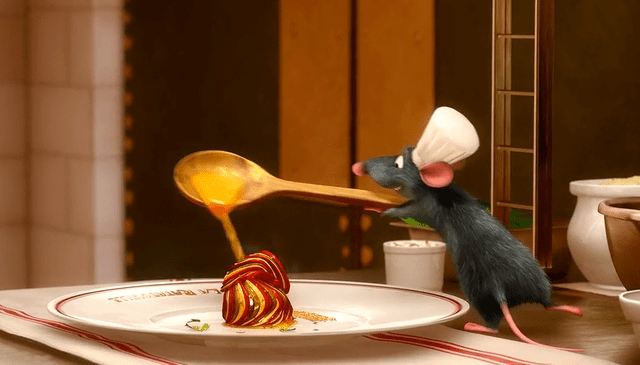
Ratatouille is one of the most renowned food films of all time. Centering around the dish ‘ratatouille’ (or is it?), this film is as French as it gets. Ratatouille was originally a peasant dish from the region of Provence, France. It is essentially a vegetable stew, consisting of eggplant, zucchini, onions, green peppers, tomatoes and garlic and is served hot or cold. Because of its vast array of vegetables, it was considered a hearty and healthy dish made by the poor farmers during the summer, taking advantage of the availability of the excess vegetables that grew in the region. However, as I’m sure you’ve gathered by now, this is not the dish portrayed in the film… well not exactly. Since as early as 1976, some French chefs began preparing their ratatouille vegetables in thin slices instead of the traditional rough-cut shapes found in a stew. This date is important as it exists in the decade during the nouvelle cuisine revolution, a movement throughout France (and eventually the world), lead by students, and soon after chefs, demanding more autonomy and freedom, especially within the kitchen. In his book Founding Cuisine Minceur, Michel Guérard recreated lighter versions of the traditional dishes within France as according to this nouvelle cuisine movement. His recipe, ‘Confit bayaldi’, differed from ratatouille by not frying the vegetables, removing peppers and adding mushrooms. This is the dish portrayed in the film and is even plated in high-end restaurants to this day. This bottom-up method of movement transformed the dish from a peasant stew to a classy dish, good enough to transport food critics all the way back to their own origins in France.
#3 – Ratatouille from ‘Ratatouille’ (2007)
 Smile! Europe on Camera