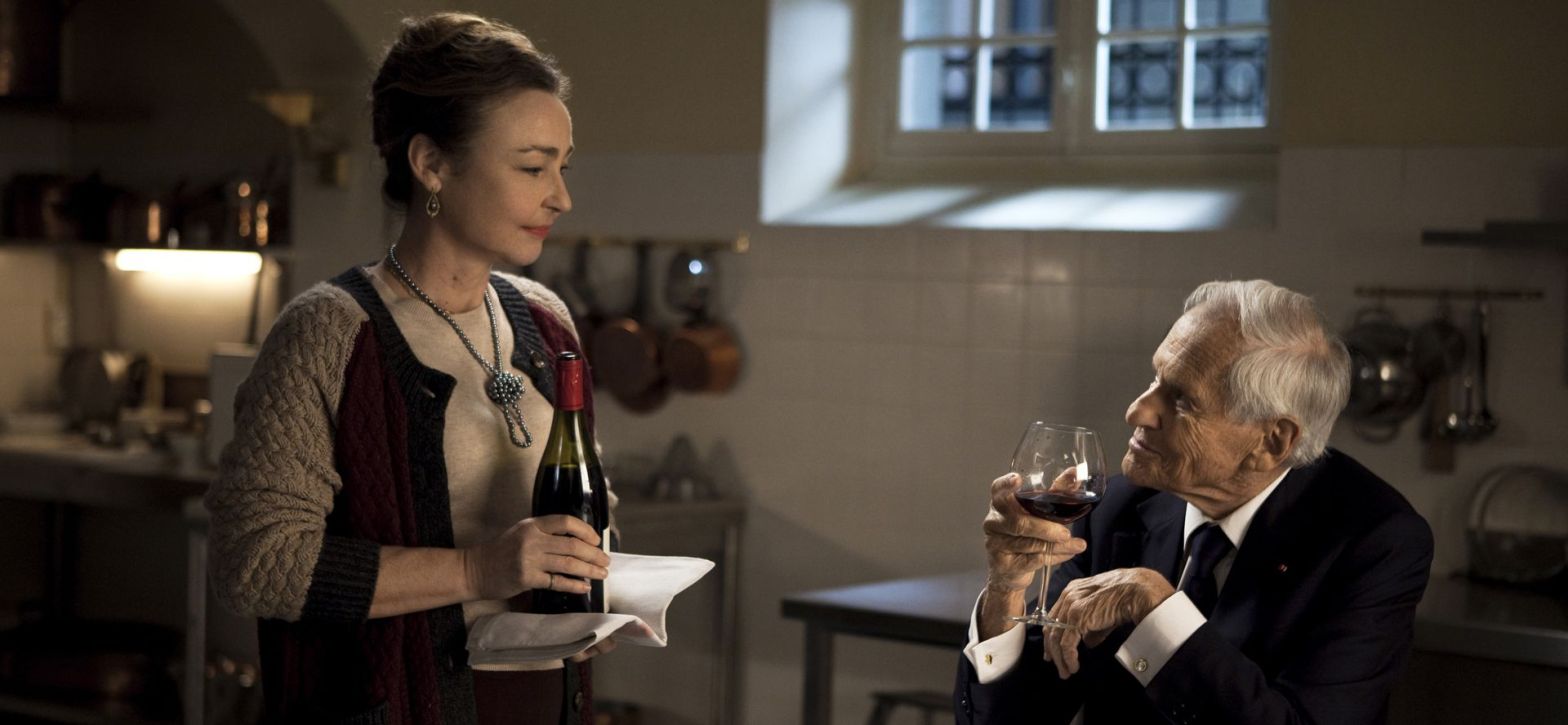
In this blog, I will be discussing a film itself, and the food it explores. Haute Cuisine is a 2012 film based on Daniele Mazet-Delpeuch, a French female Chef who served as the personal chef of the President of France, Francois Mitterrand, from 1988-1990 before becoming a cook at a research base in Antarctica. In France, the title of the film, Les Saveurs du palais is a play on words, meaning ‘the flavours of the palace’ and ‘the flavours of the palate’. Before the film begins, this already highlights one of the key themes being the ability of food to penetrate the hierarchy established within authorities, in both government and Antarctica. It also highlights the dichotomy existing between both the position of both men and women within the kitchen; the male figure is the highly regarded chef with a large and industrialised kitchen who is cooking a newer nouvelle-esc cuisine and the female being below ground cooking the traditional dishes as set by recipes within cookbooks. This also gives rise to the competing cuisines during France’s second revolution for autonomy- that being Careme and Escoffier’s traditional and codified style of cooking as opposed to the newer, refined and minimalist nouvelle cuisine that was dominating the French mindset. The President’s longing to return to tradition via food also allows him to promote cookbooks to the level of literature, reciting them as if they were poems. It also highlights how not only do people change their diet based on what they desire but also how it can change without any conscious effort as advances in medicine identify what food groups should be consumed and how often as shown by the health risks the traditional fatty French foods are imposing on the president. This intertwines with the traditional French cuisine having a large focus on regionality. The female chef, being from Perigot (a region known for rich food and truffles, many colours, fouis gras etc.), uses her own regional influence as well as directly sourcing the produce from the region in which she is cooking in order to present the best food possible. For these reasons, food cannot simply be taken out of this film and thus it is entirely a ‘foodie film’ by definition.
#4 – Haute Cuisine (2012)
 Smile! Europe on Camera